 +91 95000 10065

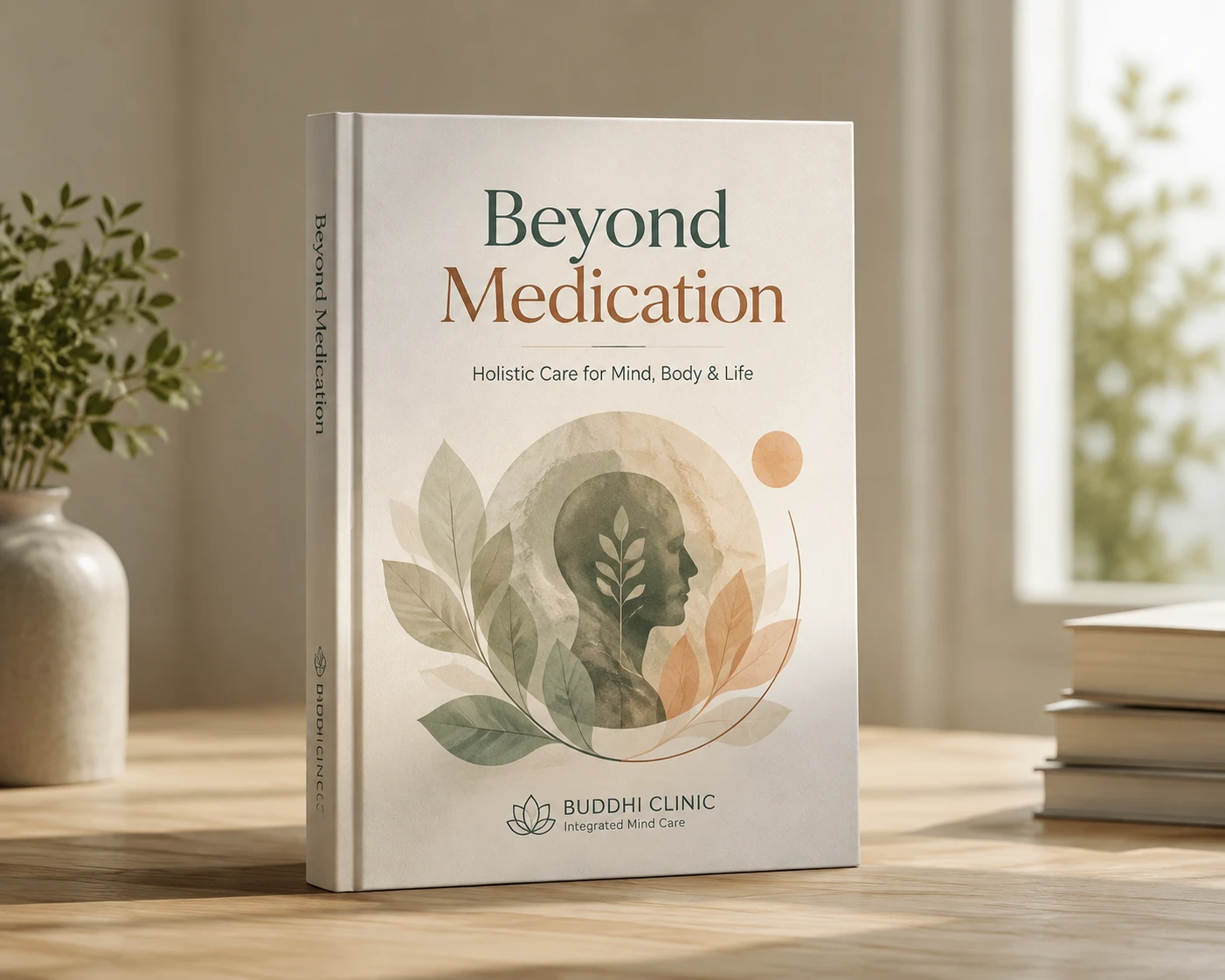
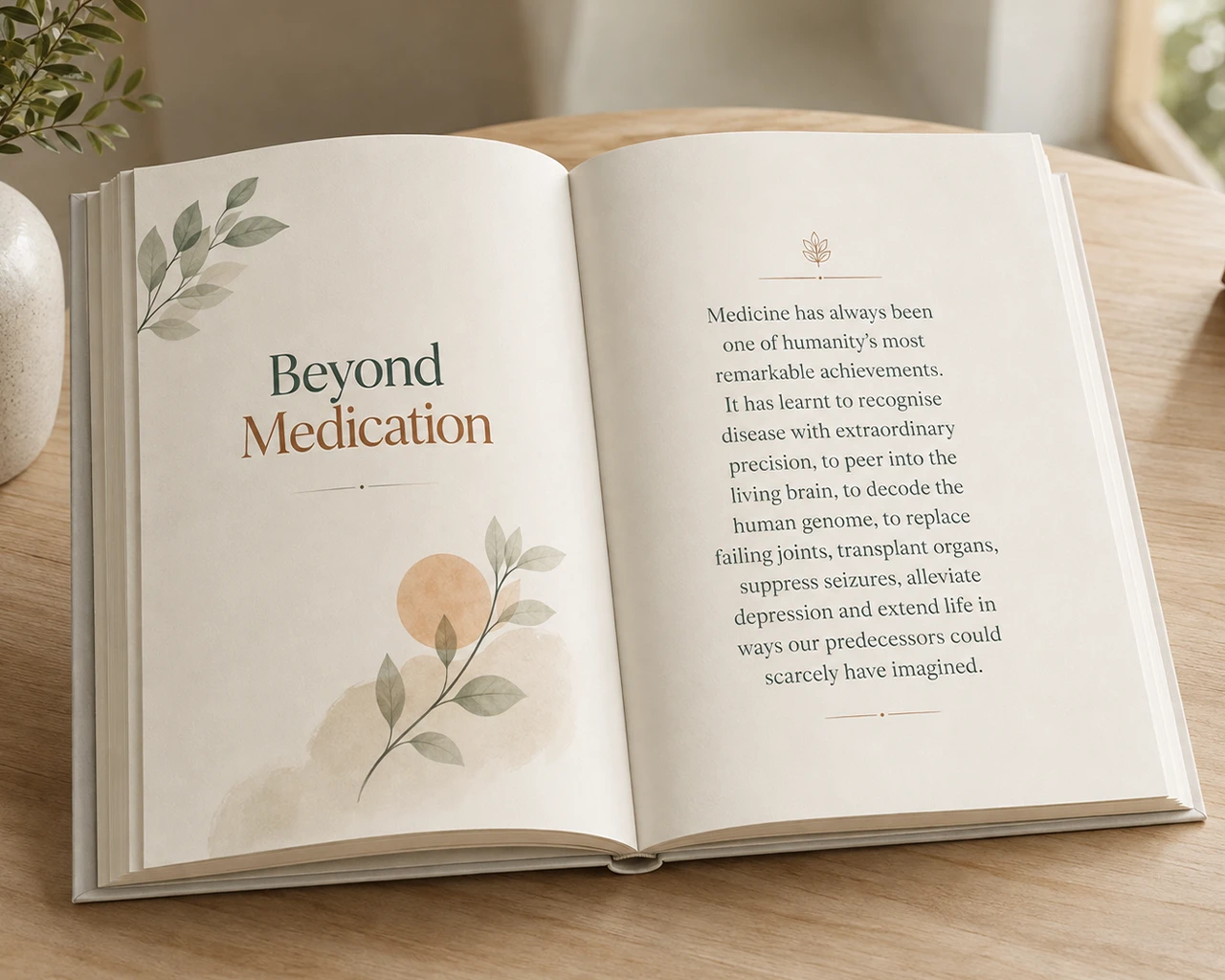
Beyond Medication
Whole Person Care
Modern medicine has taught us to understand disease with extraordinary precision. Yet healing often depends on something larger than diagnosis alone.
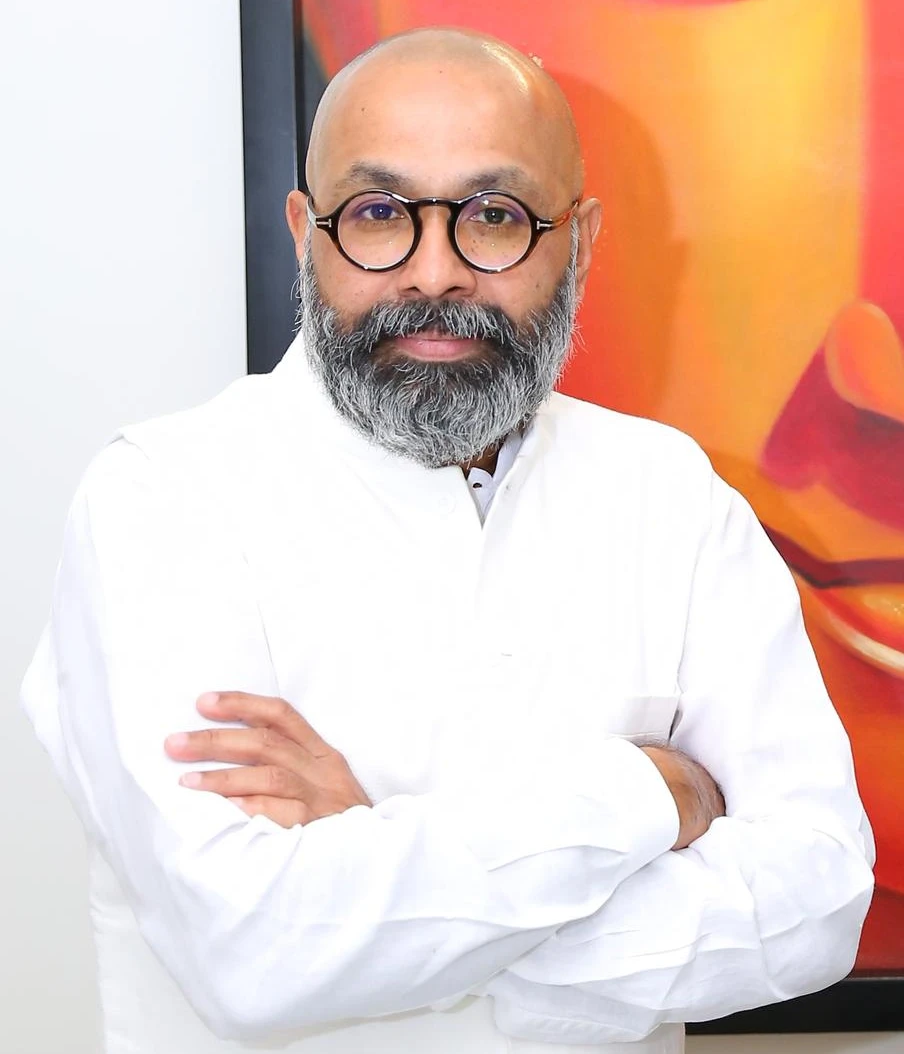
By Dr. Ennapadam S. Krishnamoorthy — Behavioural Neurologist & Neuropsychiatrist
No cost. No catch. Just tell us where to send it.
Book at a glance
A thin horizontal strip of four items, icon + label. Scannable in two seconds.

76
Pages
one sitting

8
Chapters
epilogue and afterword

10 Illustrated Historical Stamps

Read on any device
Not what disease does this person have? — but who is the person who has this disease?
For much of the past century, medicine has pursued one of the most successful intellectual projects in human history. It has unravelled the mysteries of infection, decoded the language of genes, mapped the living brain, and developed pharmaceuticals that transform once-fatal illnesses into manageable conditions.
Yet every way of seeing also shapes what remains unseen.
The woman living with depression who struggles with chronic pain and irritable bowel symptoms. The young man with autism who develops anxiety and severe sleep disturbance. The older gentleman with Parkinson’s disease who gradually loses confidence, withdraws socially, and begins to feel isolated long before his movements become disabling. The executive recovering from COVID who still lives with fatigue, autonomic dysfunction and brain fog long after the infection itself has disappeared.
Each consultation begins with a diagnosis. It almost never ends there.
Drawing on four decades of clinical practice, Beyond Medication argues that illness has a habit of overflowing the boundaries of our specialties — and that medicine can move beyond false choices: beyond body versus mind, science versus tradition, cure versus care.
Treatment is something we offer.
Healing is something that gradually unfolds.
What's inside
Render as an accordion or a clean numbered list. Chapter title bold, blurb in lighter weight.
Prologue — Beyond Medication
Every so often, medicine reaches a moment when the questions grow larger than the answers we have been accustomed to giving. This may be one such moment.
Chapter 1 — What Is Whole-Person Care?
Why the distinction between what disease does this person have and who is the person who has this disease appears subtle, and why in reality it changes everything.
Chapter 2 — What If We Looked at the Whole Person?
Medicine advanced by specialising. The brain went to one discipline, the heart to another, the mind to the psychiatrist. It was a necessary stage — but patients never arrived in parts.
Chapter 3 — Across the Lifespan
Three very different patients at Buddhi Clinic — a ten-year-old from Hawaii, an eighty-six-year-old from Kolkata, a thirty-three-year-old from Nagercoil — who appeared at first to have almost nothing in common, and taught the same lesson.
Chapter 4 — Where Does the Mind End and the Body Begin?
Symptoms that refuse the boundary: breathlessness with no cardiac cause, unexplained fatigue and migrating joint pains, the patient told that “nothing is wrong” who knows with complete certainty that something is very wrong indeed.
Chapter 5 — Buddhi, Chitta & Manas: An Indic Model of the Mind
Not because neuroscience validates ancient wisdom — it doesn’t — but because the Indian philosophical traditions asked a different and surprisingly modern question. Not where is the mind? but how does the mind work?
Chapter 6 — A Lesson from the COVID and Long COVID Years
An illness that quietly changed the questions we ask. Patients who were no longer one person with one illness, but felt like a collection of disconnected symptoms.
Chapter 7 — Can Beauty Heal?
Art, music and rhythm have belonged to poets and philosophers; healing has belonged to physicians. Modern neuroscience is beginning to explain why beauty is not added to the brain after perception — it is woven into perception itself.
Chapter 8 — What Else Can Help Us Heal?
The knowledge that arrives not in journals but in consulting rooms, rehabilitation centres and family conversations. Simple, profound, and easy to dismiss.
Epilogue — Technology in Integrative Health: The Importance of Being Earnest
Wearables, smart homes, AI, digital therapeutics. Every generation believes technology stands at the threshold of a revolution. Every generation has been partly right.
Afterword — The Democratisation of Whole-Person Health
Healthcare was once something that happened inside hospitals. But life is not lived in episodes — it unfolds every day, between consultations, between crises.
Plus: Ten illustrated historical stamps
brief profiles of physicians and healers across traditions and centuries — appear between chapters throughout the book, beginning with Charaka.
From Chapter 1
Yet, somewhere along that remarkable journey, another question quietly emerged.
- Not What disease does this person have?
- But Who is the person who has this disease?
- The distinction appears subtle. In reality, it changes everything.
About the Author
Dr. Ennapadam S. Krishnamoorthy is a behavioural neurologist and neuropsychiatrist whose work explores the meeting place of neuroscience, psychiatry and integrative medicine. He is the Founder of Buddhi Clinic, India’s pioneering chain of centres for whole-person mental and neurological healthcare, and the creator of Neurokrish, an educational initiative dedicated to understanding the brain, the mind and human flourishing.
He trained at the Institute of Neurology, Queen Square, University College London, where he acquired his PhD in Medicine (Clinical Studies). He is a Fellow of all three Royal Colleges of Physicians in the UK and has been awarded the President’s Medal of the Royal College of Psychiatrists (UK). He has 70+ scientific publications, 30+ lay articles, two Global Approach books with Cambridge University Press and multiple keynote lectures globally to his credit.
He has served as Chair of the World Health Organization’s World Health Report on Dementia, Chair of the International League Against Epilepsy (ILAE) Commission on Neuropsychiatry, and President of the International Neuropsychiatric Association.
Drawing upon four decades of clinical practice, teaching and research, his writing and podcasting seek to bridge science with wisdom, technology with compassion, and medicine with the lived experience of illness.
Listen alongside the book
This book evolved alongside The Neurokrish Immersion, a continuing educational podcast series exploring the interface between neuroscience, psychiatry, integrative medicine and whole-person health. The book synthesises those ideas into a coherent framework; the episodes go deeper on individual topics.
Foundations of Whole-Person Care
- The Promise of Integrative Medicine
- The Future of Integrative Medicine in India
- Beyond Drugs and Devices
Understanding the Connected Person
- The Wandering Nerve
- The Gut, Brain & Mind Loop
- The Gut in Alzheimer's Disease: Looking Ahead
- The Interpretation of an Unexplained Malady
Therapeutic Pathways
- Brain, Mind and Yoga
- Brain and Music
- Raga and the Brain
- When Beauty Heals: Neuroaesthetic Interventions for Mild Cognitive Impairment and Dementia
Whole-Person Clinical Care
- The Whole Person in Dementia
Get your free copy
Trust microcopy beneath the button: 🔒 Your email stays with Buddhi Clinic. We never sell or share it. Unsubscribe in one click.
Frequently Asked Questions
Is it really free?
Yes. No payment, no trial, no card details. Registration simply lets us know who’s reading and lets us tell you when the next book in the series arrives.
What format is the book in?
PDF, readable on phone, tablet, laptop or e-reader. You’re welcome to print it for personal use.
Do I need to be a doctor to understand it?
Not at all. It is written for the general reader. Clinicians will find plenty here too, but no medical background is assumed.
Can I share it with someone else?
Please do point them to this page so they can get their own copy. Do not host or reproduce the file elsewhere — the book is copyright Buddhi Clinic.
Is this medical advice?
No. It is a reflection on how medicine and healing work. For anything concerning your own health, please speak to a qualified clinician. If you’d like to consult at Buddhi Clinic, our details are below.
What are the other Buddhi Books?
Beyond Medication is Book Four in the series. Browse the full series →
I registered but the email hasn't arrived.
Check your spam or promotions folder first. Still missing? Write to us at [email] and we’ll send it directly.


 Book a Consultation