 +91 95000 10065

BrainsWay Deep TMS
What is BrainsWay Deep TMS ?
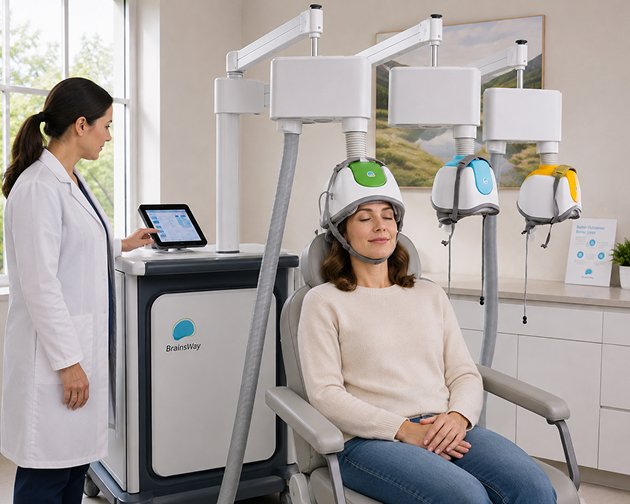
BrainsWay Deep TMS is an advanced, non-invasive therapy that uses patented H-Coil technology to stimulate deeper and broader regions of the brain than conventional TMS. The coil sits inside a cushioned helmet worn on the head and delivers magnetic pulses through the scalp — no surgery, no anaesthesia, no medication.
What sets Deep TMS apart is that it is not a single device with a single target. BrainsWay’s platform uses a family of purpose-built coils, each engineered to reach the specific network involved in a particular condition. The coil is chosen for the patient, not the other way around.
One Platform,
Three Targeted Coils
- H1 Coil — Depression
- H7 Coil — OCD and Anxious Depression
- H4 Coil — Addiction and Smoking Cessation
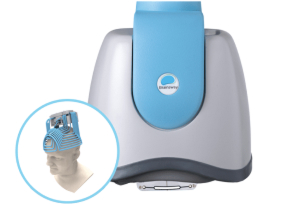

H1 Coil — Depression
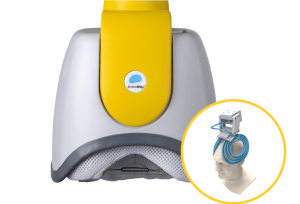

H7 Coil — OCD and Anxious Depression
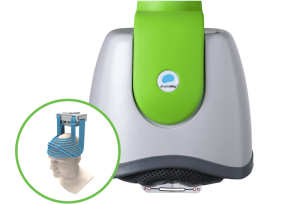

H4 Coil — Addiction and Smoking Cessation
Why Choose Buddhi Clinic for Deep TMS
Each H-Coil delivers repetitive magnetic pulses that penetrate deeper cortical and subcortical regions, activating an entire network rather than an isolated patch of surface tissue. This improves communication between brain cells and encourages neuroplasticity — the brain’s natural capacity to reorganise and form healthier connections.
By restoring balanced activity in underactive or dysregulated circuits, Deep TMS supports improvements in mood, motivation, impulse control, and cognitive function. Because the depth and shape of the field differ between the H1, H7, and H4 coils, the same platform can address very different clinical presentations with equal precision.
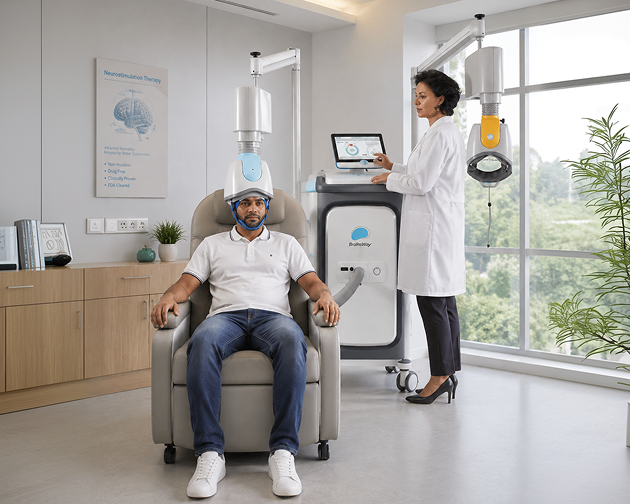
Precision Brain Stimulation for Targeted Treatment
Deep TMS therapy in Chennai at Buddhi Clinic follows a structured clinical protocol to ensure safe, accurate, and effective brain stimulation.
Mapping the Brain Before Treatment
- Detailed clinical evaluation to determine suitability for Deep TMS
- Diagnostic assessment to identify which coil — H1, H7, or H4 — matches the target network
- Motor threshold determination to personalise stimulation intensity for that coil
- Explanation of the therapy process and session expectations
- Comfortable helmet fitting and patient positioning before starting
Delivering Controlled Magnetic Pulses
- Treatment delivered through a cushioned helmet housing the selected H-Coil
- Repetitive pulses stimulate deeper and broader brain regions simultaneously
- Intensity, frequency, and protocol adjusted to the coil and the patient
- Sessions typically last around 20 minutes
- Patients remain awake and alert throughout and can resume normal activity immediately
Monitoring Progress and Response
- Assessment of patient comfort and tolerance after each session
- Structured symptom tracking using validated clinical scales
- Adjustment of stimulation parameters where needed
- Option to switch coils if response plateaus — for example, H1 to H7 in resistant depression
- Continuation of sessions as part of a complete treatment plan
Key Benefits
- Non-invasive, non-systemic brain stimulation therapy
- Condition-specific coils rather than a one-size-fits-all approach
- Drug-free, with no sedation and no systemic side effects
- Improves mood, cognition, and behavioural regulation
- No downtime — comfortable outpatient sessions
- Supports long-term neuroplasticity and sustained recovery
- An accelerated treatment option, called SWIFT™ Deep TMS, is also FDA-cleared, shortening the acute treatment phase from 4 weeks to 6 days.
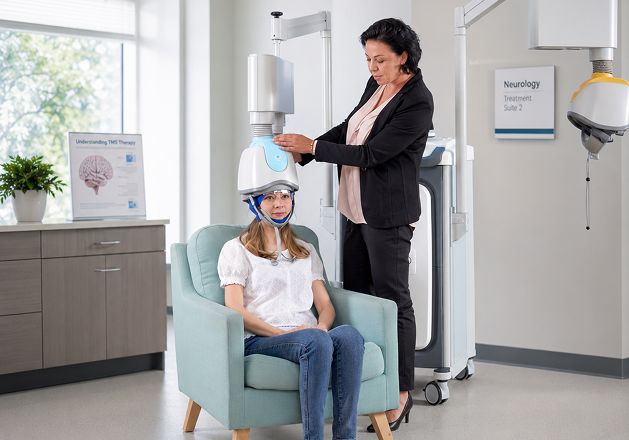
Reaching Deeper Brain Networks and Supporting Neuroplasticity
Access to the full BrainsWay coil range is what turns Deep TMS from a single treatment into a genuinely individualised one. At Buddhi Clinic, the decision of which coil to use — and when to change it — is made by clinicians who work across neurology, psychiatry, psychology, and rehabilitation together, rather than by a single specialist working in isolation. That integrated model matters most for the patients who arrive here after other treatments have fallen short: the person whose depression has resisted several drug trials, the patient whose OCD has not yielded to therapy alone, the smoker who has relapsed repeatedly. Deep TMS is positioned within a broader plan at our clinic — alongside cognitive therapy, counselling, and rehabilitation — because stimulation works best when the rest of a person’s care is pulling in the same direction.
Every patient begins with a detailed assessment that determines suitability, identifies the target network, and sets the stimulation protocol. Progress is measured, reviewed, and adjusted throughout. It is this combination — advanced technology, multidisciplinary judgement, and close follow-up — that makes Buddhi Clinic a trusted destination for Deep Transcranial Magnetic Stimulation in Chennai.


 Book a Consultation