 +91 95000 10065

Speech Therapy: Supporting Clear and Confident Communication
Join workshops, sessions, and events focused on awareness, education, and meaningful conversations in care.

Helping You Communicate with Clarity
Speech therapy is a specialised treatment that helps improve how a person speaks, understands language, and communicates. It also supports individuals who have difficulty with voice, fluency, or swallowing.
This therapy is useful for both children and adults, whether the concern is delayed speech, unclear pronunciation, difficulty expressing thoughts, or challenges after a neurological condition.
At Buddhi Clinic, speech therapy is part of a broader approach that looks at communication not in isolation, but as a function of the brain, behaviour, and overall development.
Speech Therapy: A Closer Look
What Does Speech Therapy Treat?
- Speech sound difficulties (unclear or mispronounced words)
- Language delays or difficulties in understanding and expression
- Stammering or fluency disorders
- Voice-related concerns
- Autism-related communication challenges
- Developmental delays in children
- Speech or language loss after stroke or brain injury
- Swallowing difficulties (dysphagia)
The focus is not just on speech, but on meaningful communication in everyday life.

How Speech Therapy Works
Speech therapy begins with a detailed assessment of how a person communicates, including speech clarity, language understanding, and expression.
Based on this, a personalised plan is created. Therapy sessions may include:
- Exercises to improve pronunciation and articulation
- Activities to develop vocabulary and sentence formation
- Techniques to improve fluency and voice control
- Strategies to support comprehension and expression
- Guidance for parents or caregivers to continue practice at home
The approach is gradual, consistent, and adapted to each individual’s pace.
What to Expect During Therapy
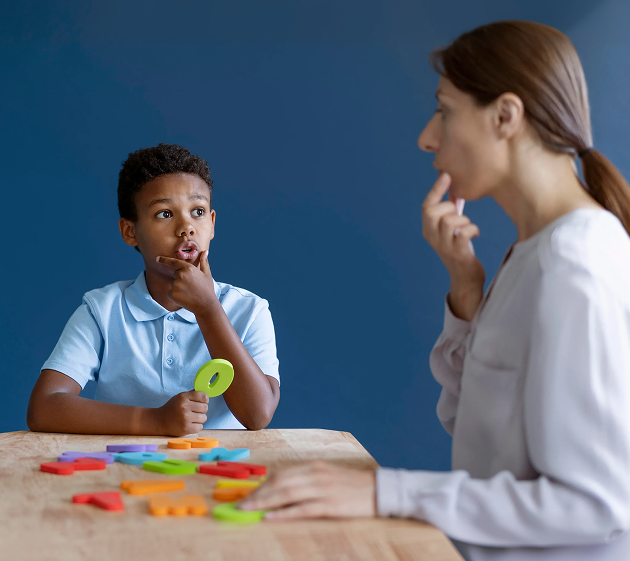
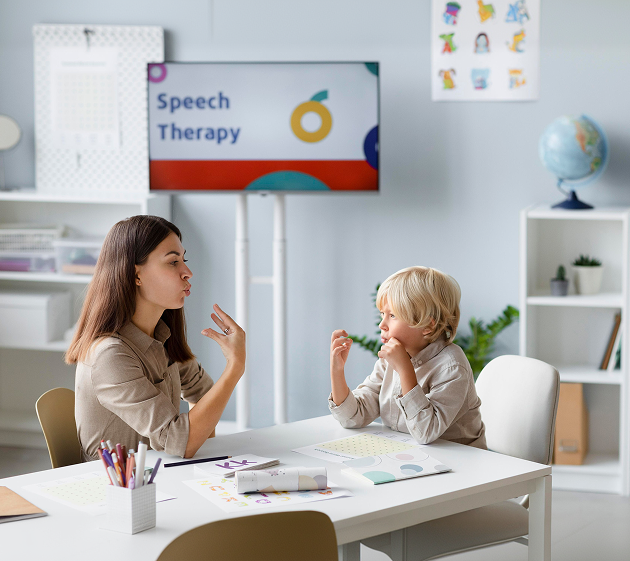
Speech therapy sessions are typically interactive and structured around specific goals.
- Sessions may involve speaking exercises, visual tools, and guided activities
- For children, therapy is often play-based to encourage engagement
- Progress is monitored regularly, and the plan is adjusted as needed
- Families are supported with practical strategies to continue outside sessions
The goal is to build communication skills that are functional and sustainable.
Benefits of Speech Therapy
Speech therapy can help:
- Improve clarity of speech
- Strengthen language understanding and expression
- Build confidence in communication
- Support social interaction and participation
- Improve voice quality and fluency
- Assist with safe swallowing when required
Over time, these improvements can make a meaningful difference in daily life.

When Should You Consider Speech Therapy?
You may consider speech therapy if:
- A child is not speaking or is delayed compared to peers
- Speech is difficult to understand
- There are difficulties in forming sentences or expressing thoughts
- There is stammering or hesitation while speaking
- Communication challenges are affecting learning or social interaction
- There are swallowing or voice-related concerns
Early support can make a significant difference, but therapy can be beneficial at any stage.

Speech Therapy at Buddhi Clinic
At Buddhi Clinic, speech therapy is delivered as part of an integrated care model that combines neurological insight, behavioural understanding, and developmental support.
Each individual undergoes a detailed evaluation before therapy begins. Based on this, a personalised plan is created to address specific communication needs.
The focus is on helping individuals not just speak better, but communicate more effectively, with confidence and clarity.
Frequently Asked Questions (FAQs)
How long does speech therapy take to show results?
Progress varies depending on the individual’s condition and consistency of practice. Some may notice changes within weeks, while others may require longer-term support.
Is speech therapy only for children?
No. Speech therapy is beneficial for both children and adults, including those recovering from stroke, injury, or neurological conditions.
Do parents or caregivers need to be involved?
Yes, especially for children. Consistent practice at home significantly improves outcomes and helps reinforce what is learned during sessions.
Can speech therapy help with social communication?
Yes. Therapy can support not just speech clarity but also a person’s interactions, expression, and responses in social situations.
Is therapy done one-on-one or in groups?
Most sessions are conducted one-on-one to ensure personalised attention, though group sessions may be used in certain cases to support social communication.
