 +91 95000 10065


When the World Won’t Stay Still
Vertigo isn’t imbalance; it’s a disruption in how the brain interprets movement, space, and orientation.
Vertigo: Understanding Vertigo Beyond Dizziness
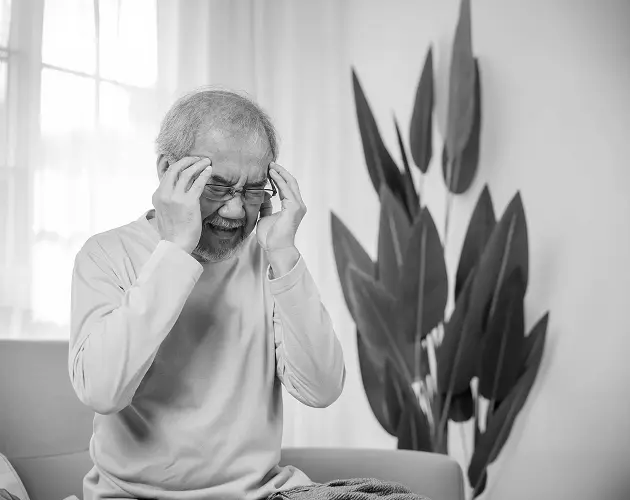
Vertigo is a neurological sensation where movement is perceived even when the body is still. It arises from miscommunication between the inner ear, brainstem, visual system, and balance centres of the brain. When these systems fall out of sync, the world may spin, tilt, or sway, often accompanied by nausea, fear, and loss of confidence in movement.
The Problem Isn’t Motion. It’s Misinformation.
Vertigo happens when the brain receives conflicting signals about position and movement, and doesn’t know which one to trust.

Vertigo Simply Explained
Balance depends on precise coordination between the vestibular system (inner ear), vision, muscles, and brain. Vertigo occurs when this network sends mixed or delayed signals. The brain reacts by creating a false sense of motion, triggering dizziness, disorientation, and protective fear responses. Over time, this can condition the brain to avoid movement altogether, unless the system is retrained safely and gradually.
Symptoms
Vertigo affects perception, posture, and confidence.
- Spinning or Swaying Sensation: Feeling that you or the environment is moving, rotating, or tilting.
- Nausea & Autonomic Symptoms: Queasiness, vomiting, sweating, palpitations, or lightheadedness.
- Visual Disturbances: Blurring, jumping vision, difficulty focusing during head movement.
- Postural Instability: Unsteadiness while standing, walking, or turning, often with fear of falling.
Assessments
Understanding where balance breaks down.
- Vestibular Function Evaluation
- Neurological Examination
- Postural & Gait Analysis
- Visual–Vestibular Integration Testing
- Autonomic Nervous System Review
- Imaging & Advanced Diagnostics (when indicated)
Treatment
Restoring balance by retraining the brain, not just suppressing symptoms.
- Vestibular Rehabilitation Therapy: Gradual recalibration of balance pathways
- Neuromodulation: Supporting brainstem and sensory integration circuits
- Visual & Postural Training: Improving coordination between eyes, neck, and body
- Autonomic Regulation: Addressing nausea, palpitations, and motion intolerance
- Movement Confidence Rebuilding: Reducing fear-based avoidance patterns
Outcomes
With targeted care, individuals experience reduced spinning episodes, improved stability, better tolerance to movement, decreased nausea, and renewed confidence in daily activities such as walking, driving, and turning.
The Buddhi Clinic Advantage
Precision balance rehabilitation for complex vertigo
Vertigo care integrates neurology, vestibular science, rehabilitation medicine, and nervous system regulation, allowing treatment to be tailored to the exact source of imbalance rather than applying one-size-fits-all solutions.
FAQ
Clarity for a Disoriented System
Is vertigo the same as dizziness?
No. Vertigo involves a false sense of motion, while dizziness is a broader term.
Can anxiety cause vertigo?
Anxiety doesn’t cause vertigo, but it can amplify symptoms and delay recovery.
Does vertigo always come from the inner ear?
Not always. It may originate from the brain, neck, vision, or autonomic system.
Can vertigo become chronic?
Yes, especially if the brain adapts incorrectly after an initial episode.
Is medication enough to treat vertigo?
Medication may reduce symptoms temporarily, but rehabilitation addresses the root cause.
