 +91 95000 10065


When a Habit Takes Over, We Help You Take Back Control.
Addiction isn’t a failure of willpower; it’s a brain-body loop that can be rewired with the right care.
Substance Abuse & Addiction: Understanding Substance Abuse & Addiction
Addiction isn’t weakness. It’s a condition shaped by neurochemical shifts, emotional triggers, and reinforced behaviour loops. It alters reward, stress, and decision-making circuits, creating a cycle that feels unbreakable. With integrated brain-mind-body care, that cycle can be rewired and recovery can last.
It’s Not About Stopping the Substance. It’s About Healing the System.
Addiction thrives in imbalance. We work to restore the brain, calm the nervous system, and rebuild emotional pathways, so recovery feels natural, not forced.

Condition Simply Explained
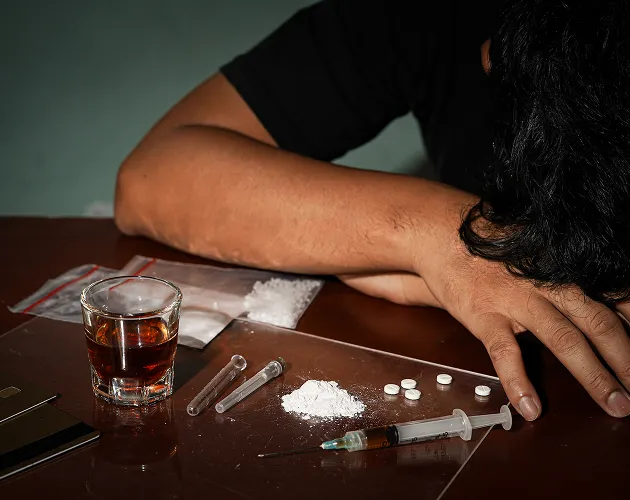
Addiction is a complex brain-behaviour condition where substances hijack the reward system, creating dependence and compulsive use despite consequences. Over time, the brain adapts to expect the substance, diminishing control, disrupting emotions, and weakening decision-making. Recovery requires more than detox; it needs rewiring, emotional repair, renewed coping strategies, and holistic rehabilitation.
Symptoms of Anxiety
Addiction shows up in the mind, the body, and the life around you.
- Emotional: Irritability, guilt, mood swings, emotional numbness
- Cognitive: Cravings, impaired judgment, loss of control, obsessive thoughts
- Physical: Withdrawal symptoms, sleep disturbances, fatigue, health decline
- Behavioural: Secrecy, social withdrawal, risky actions, neglecting responsibilities
Assessments
Our evaluation explores the depth of dependence and the brain-body patterns behind it. We use qEEG to assess reward and impulse-control circuits, psychometric tools to evaluate triggers and co-existing conditions, neurological review for long-term effects, and a whole-person assessment to understand lifestyle, trauma load, and emotional patterns.
Treatment
We don’t focus only on stopping the substance; we treat the system that keeps returning to it.
Treatment pathways may include neuromodulation for craving reduction, neurofeedback for impulse regulation, psychotherapy for trauma and triggers, mind-body practices for stress recalibration, medical supervision when required, and lifestyle restructuring to rebuild resilience.
Outcomes
With comprehensive care, clients experience decreased cravings, improved emotional balance, clearer thinking, healthier routines, stronger self-control, and a renewed sense of personal agency. Recovery becomes a structured, supported, and empowering process, not a struggle carried alone.
The Buddhi Clinic Advantage
We treat dependence at its source, inside the brain, the body, and the emotional system.
Our integrated model blends neuroscience-driven interventions, behavioural therapy, physical rehabilitation, and holistic healing—addressing addiction from every angle. This depth of care creates lasting recovery and helps rebuild health, stability, and self-trust.
Answers for the Journey Back to Yourself
Explore expert insights, practical guidance, and clear answers to your most pressing questions about anxiety and its care.
Is addiction a disease or a choice?
It’s a medical condition driven by changes in brain circuits, not a moral failure or lack of willpower.
Can addiction really be reversed?
Yes. With consistent treatment, the brain can adapt, heal, and relearn healthier patterns.
What role does neuroscience play in recovery?
Tools like qEEG and neuromodulation help stabilise craving circuits, improve self-control, and support long-term recovery.
Do you treat the psychological side of addiction?
Absolutely. Therapy addresses trauma, triggers, coping strategies, and emotional recovery.
Are medications always required?
Not necessarily. They are used only when clinically indicated. Many recover through brain-based therapies and holistic care.
Can addiction co-exist with anxiety or depression?
Very commonly. We assess and treat co-existing conditions together for stronger recovery outcomes.
How long does recovery take?
It varies by individual and depends on duration, severity, and support. We track progress closely and tailor care continuously.
