 +91 95000 10065


When Expression Struggles, Understanding Begins
Speech and language challenges are not just communication issues; they reflect how the brain processes, plans, and expresses information.
Speech and language disorders: Helping Thoughts Find Their Way Out
Speech and language disorders affect how a person understands, processes, and expresses thoughts through speech, writing, gestures, or comprehension. These challenges can appear in early childhood, after neurological injury, or alongside developmental and cognitive conditions. When left unaddressed, they impact learning, confidence, social connection, and emotional well-being. Understanding the brain behind communication is the first step toward meaningful improvement.
Communication Is a Brain Skill
Speech and language difficulties aren’t a lack of effort or intelligence; they’re disruptions in neural networks responsible for processing, planning, and expression.
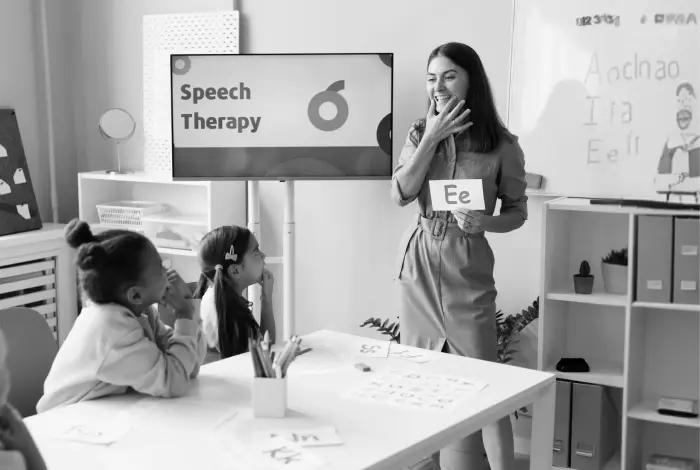
Speech & Language Disorders, Simply Explained
Speech and language disorders occur when the brain struggles to coordinate comprehension, word retrieval, articulation, or fluency. These challenges may involve difficulty understanding language, forming sentences, pronouncing sounds, or expressing ideas clearly. Because communication relies on multiple brain regions working together, effective care must address both neurological function and behavioural practice.
Symptoms
Communication challenges often show up gradually and vary by age and cause.
- Expressive Difficulties: Trouble forming sentences, limited vocabulary, unclear speech, or difficulty expressing thoughts and needs
- Receptive Challenges: Difficulty understanding instructions, questions, or conversations
- Speech Sound Issues: Mispronunciations, articulation errors, stammering, or fluency disruptions
- Social Communication Struggles: Difficulty with conversation flow, turn-taking, or non-verbal cues
- Academic & Emotional Impact: Frustration, withdrawal, reduced confidence, or learning difficulties
Assessments
Understanding communication begins with understanding the brain.
- Speech & Language Evaluation: Detailed assessment of articulation, fluency, comprehension, expression, and pragmatic skills
- Neurodevelopmental Review: Screens for underlying developmental, neurological, or cognitive contributors
- qEEG Brain Mapping (where indicated): Identifies neural processing patterns affecting language and attention
- Whole-Person Evaluation: Integrates cognitive, emotional, sensory, and motor factors to guide intervention planning
Treatment
Targeted interventions designed to strengthen communication pathways.
- Speech & Language Therapy: Structured exercises to improve clarity, comprehension, fluency, and expressive skills
- Neurotherapy Support: Neurofeedback or neuromodulation to enhance attention, processing speed, and neural coordination
- Cognitive & Behavioural Strategies: Builds confidence, reduces frustration, and supports functional communication
- Sensory & Motor Integration (when required): Addresses oral-motor planning and sensory regulation
- Family & Environmental Guidance: Empowers caregivers with strategies to reinforce progress beyond sessions
Outcomes
Care focuses on measurable improvements, clearer speech, better comprehension, increased confidence, stronger social interaction, and functional communication in daily life. Progress is tracked, refined, and supported over time to ensure skills translate beyond the clinic into real-world settings.

Our multidisciplinary approach integrates speech therapy, brain-based assessments, neurotechnology, and behavioural support, ensuring communication challenges are addressed at their neurological roots, not just at the surface.
Answers That Support Clearer Communication
Explore expert insights, practical guidance, and clear answers to your most pressing questions about speech and language disorders and its care.
Are speech and language disorders only seen in children?
No. They can occur at any age, due to developmental delays, neurological conditions, injury, or degenerative changes.
Is delayed speech always a sign of low intelligence?
Absolutely not. Many individuals with speech or language challenges have average or above-average intelligence.
Can technology really help speech improvement?
Yes. Brain-based tools help improve attention, processing, and neural coordination, making speech therapy more effective.
How long does speech therapy take to show results?
Timelines vary. Some see improvements within months, while others benefit from longer, structured support.
Will therapy help with confidence and social interaction?
Yes. As communication improves, confidence, participation, and social engagement often improve naturally.
Is parental involvement important?
Very. Guided strategies at home significantly enhance progress and long-term outcomes.
Can adults still improve long-standing speech difficulties?
Yes. The brain remains adaptable. With the right interventions, improvement is possible at any age.
