 +91 95000 10065


When the Loop Takes Over, We Help You Take It Back.
Decoding obsessive loops and compulsive patterns using advanced brain-mapping and integrative therapies designed to restore clarity and control.
Obsessive-Compulsive Disorder (OCD): Understanding OCD Beyond the Surface
Obsessive-Compulsive Disorder isn’t about “being neat” or “liking things a certain way.” It’s a neurobehavioural condition where intrusive thoughts create compulsive loops that drain time and peace. By understanding the brain, behaviour, and triggers behind these cycles, recovery becomes a process of gentle rewiring, helping the mind break free.
Your Thoughts Aren’t You. They’re Just Loud.
OCD amplifies certain brain circuits, making thoughts feel urgent and uncontrollable. When we map these circuits, we can gradually quiet them and rebuild your inner sense of ease.

OCD Simply Explained
A clear look at what OCD feels like, why it happens, and how the cycle can be broken.
Symptoms
OCD presents in patterns that can be misunderstood or hidden. Knowing the signs helps unravel the cycle early.
- Intrusive Thoughts (Obsessions): Unwanted, repetitive thoughts about contamination, harm, order, or taboo themes that cause distress and doubt.
- Repetitive Behaviours (Compulsions): Actions like checking, cleaning, counting, arranging, or reassurance-seeking performed to relieve anxiety or prevent imagined harm.
- Cognitive Patterns: Mental compulsions such as rumination, silent counting, or replaying scenarios to “neutralise” thoughts.
- Emotional & Behavioural Signs: Guilt, overwhelm, avoidance of triggers, and difficulty carrying out daily tasks without rituals or checking.
Assessments
Combining clinical precision with advanced neurodiagnostics to understand your patterns from the inside out.
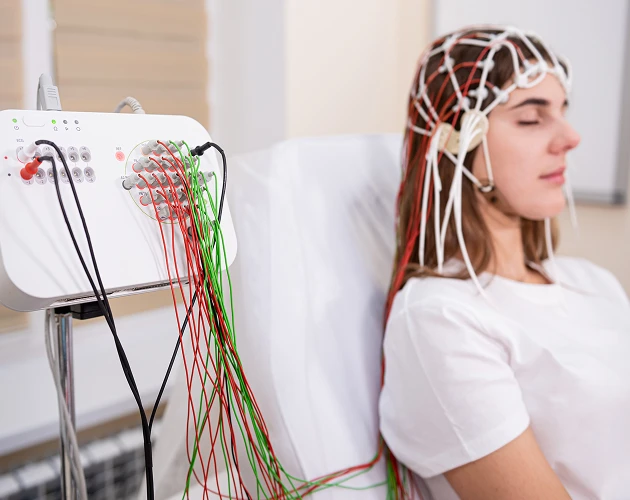
- qEEG Brain Mapping: Identifies activity spikes in circuits linked to intrusive thoughts and compulsive urges.
- Psychometric Evaluation: Measures symptom severity, themes of obsession, and compulsive behaviours for personalised planning.
- Neurological Review: Screens for brain, nerve, or metabolic issues that may influence OCD patterns.
- Whole-Person Evaluation: Assesses lifestyle, stress patterns, sleep cycles, and emotional factors shaping the OCD loop.
Treatment
Our integrated model helps retrain the brain and reduce the power of compulsions.
- Neuromodulation: rTMS, tDCS, and taVNS modulate OCD-linked networks for improved impulse control and reduced intrusive thoughts.
- Neurofeedback: Trains the brain to stabilise overactive circuits and improve cognitive flexibility.
- CBT & ERP Therapy: Evidence-based behavioural retraining helps weaken ritual responses and build tolerance to uncertainty.
- Mind-Body Interventions: Yoga, breathing therapy, meditation, and Ayurveda help reduce anxiety and reset the nervous system.
- Lifestyle Correction: Sleep optimisation, stress tracking, nutrition, and routine restructuring support long-term relief.
Outcomes
Our approach helps reduce intrusive thoughts, shorten compulsive cycles, rebuild confidence, and restore daily functioning. With personalised neuro-behavioural care and continuous monitoring, progress becomes measurable, sustainable, and empowering.
The Buddhi Clinic Advantage
An integrated path that rewires thoughts, restores control, and supports long-term freedom from compulsions.
Our specialists decode your mind-body patterns, identify the root drivers of OCD, and design a plan combining neuroscience, behavioural therapy, physical treatments, and holistic healing. This depth of integration is what creates lasting change.
Answers That Bring Clarity
Explore expert insights, practical guidance, and clear answers to your most pressing questions about anxiety and its care.
Is OCD just about cleanliness or checking?
No. OCD can show up as intrusive thoughts, mental rituals, guilt loops, or fears unrelated to cleanliness or order.
Can OCD be cured or only managed?
With the right combination of therapy, neuromodulation, and neuro-behavioural retraining, symptoms can be reduced dramatically and remain stable long-term.
How does brain-mapping help?
qEEG reveals patterns of overactivity and dysregulation in OCD-related networks, guiding personalised treatments.
Is ERP therapy necessary for all OCD cases?
ERP is highly effective but works even better when combined with brain-based interventions that lower distress and reactivity.
Can OCD worsen if left untreated?
Yes. The loop often becomes stronger over time. Early intervention can prevent escalation and improve quality of life.
Is OCD linked to anxiety?
Often, yes. Anxiety fuels the compulsion cycle, but OCD has its own neurological signature that needs specific care.
Do you treat children or adolescents with OCD?
Absolutely. We tailor assessments and therapies to age-specific needs, especially for early-onset OCD.
