 +91 95000 10065


Pain That Feels Out of Proportion Deserves Care That Goes Beyond Explanation.
Advanced neuromodulation, precision diagnostics, and integrative therapy are designed to retrain the nervous system out of chronic pain loops.
Complex Regional Pain Syndrome (CPRS): Understanding Pain That Outlasts the Injury
Complex Regional Pain Syndrome isn’t typical pain; it’s the nervous system going into overdrive. After an injury or surgery, the body’s pain, temperature, and swelling responses become exaggerated, creating intense discomfort that persists even when tissues have healed. CRPS involves nerve dysfunction, brain-body miscommunication, and autonomic imbalance. With the right interventions, these pain circuits can be recalibrated.
Your Pain Has a Pattern. And Patterns Can Be Rewired.
CRPS is driven by abnormal signaling between nerves, the spinal cord, and the brain. When we map and understand these signals, we can gradually teach the pain system to reset.
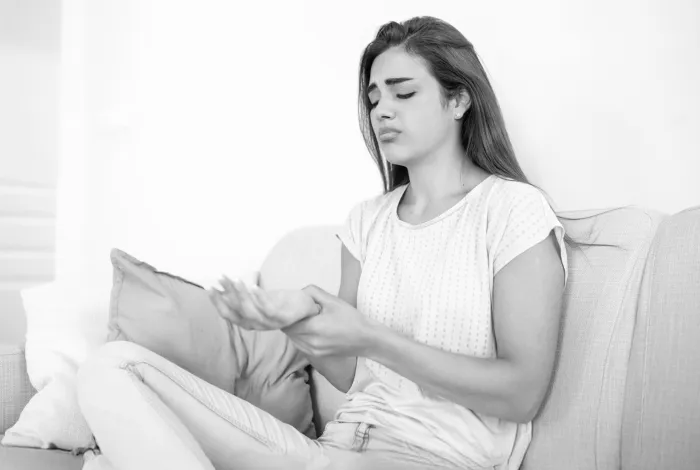
CRPS Simply Explained
A condition where the body’s protective system becomes hypersensitive, overreacting to touch, temperature, or movement, and gets stuck in a chronic pain loop.
Symptoms
CRPS expresses itself through severe, disproportionate, and unexplained changes in sensation and appearance.
Categories with Descriptions
- Sensory Symptoms: Burning pain, extreme tenderness, or pain triggered by gentle touch or temperature changes.
- Motor Symptoms: Stiffness, weakness, tremors, or reduced movement because the pain circuit restricts mobility.
- Autonomic Symptoms: Skin temperature differences, swelling, sweating changes, discoloration, or shiny skin texture.
- Trophic Changes: Altered nail or hair growth, joint stiffness, and muscle atrophy due to prolonged nervous system distress.
Assessments
We decode the pain circuit, from nerves to brain signals, to understand what’s driving CRPS.
- Sensory & Motor Evaluation: Assesses pain triggers, touch sensitivity, movement restrictions, and functional changes.
- Autonomic Nervous System Testing: Identifies temperature asymmetry, swelling, sweating patterns, and vascular changes.
- qEEG / Brain Mapping: Reveals altered pain-processing networks, helping target neuromodulation precisely.
- Psychometric Screening: Evaluates pain perception, emotional load, and the mind-body impact of chronic pain.
- Whole-Person Review: Maps lifestyle factors and coexisting conditions influencing pain cycles.
Treatment
Interventions that soothe the nervous system, restore movement, and gradually retrain pain pathways.
- Neuromodulation: rTMS, tDCS, and taVNS to calm overactive pain networks in the brain.
- Neuro-rehabilitation & Motor Retraining: Gradual conditioning to restore safe movement and reduce hypersensitivity.
- Desensitisation Therapies: Gentle graded exposure to touch and temperature to reset sensory pathways.
- Pain Psychology: Techniques that ease hypervigilance and reduce pain amplification.
- Integrative Medicine: Ayurveda, physiotherapy, yoga therapy, and breathwork to support whole-system healing.
Outcomes
With consistent therapy, patients often experience reduced pain intensity, improved limb function, better temperature regulation, and increased mobility. As the nervous system stabilises, the exaggerated fight-or-flight pain loop softens, restoring confidence and daily functioning.
The Buddhi Clinic Advantage
Where modern neuromodulation, precision diagnostics, and integrative therapies merge to treat the root, not just the pain.
CRPS needs more than painkillers, it requires understanding how your nerves, brain, and autonomic system miscommunicate. Our multidisciplinary experts combine advanced neuromodulation, sensory retraining, physical therapy, and mind-body healing to gradually rewire pain circuits and restore comfort, mobility, and function.
Answers That Bring Clarity to Complex Pain
Explore expert insights, practical guidance, and clear answers to your most pressing questions about anxiety and its care.
Is CRPS permanent?
No. Early diagnosis improves outcomes, but even long-standing CRPS can improve significantly with the right brain-body therapies.
Why does a small injury cause such severe pain?
CRPS occurs when the nervous system becomes hypersensitive, sending continuous danger signals even after tissues heal.
Can CRPS spread?
In some cases, symptoms extend to nearby areas due to central nervous system involvement, but early treatment reduces this risk.
How does neuromodulation help?
It calms the overactive pain circuits in the brain, reducing sensitivity and restoring normal processing.
Will movement worsen CRPS?
Avoiding movement can actually reinforce pain loops. Guided, graded movement helps retrain the system safely.
Is CRPS linked to psychological factors?
CRPS is a neurological condition, not imagined. However, stress and anxiety can amplify pain, making mind-body therapy beneficial.
How long does recovery take?
Timelines vary. Improvement is gradual but measurable with consistent, tailored treatment.
