 +91 95000 10065


When Brain Signals Don’t Reach the Body
Disorders affecting the brain, spinal cord, nerves, or neuromuscular junction can disrupt movement, sensation, and autonomic function.
Central nervous system (CNS): Understanding the Nervous System’s Communication Breakdown
The nervous system functions as a vast communication network. Central nervous system (CNS) disorders affect the brain and spinal cord, while peripheral nervous system (PNS) disorders involve nerves that carry signals to and from the body. When these pathways are disrupted, by disease, injury, inflammation, or degeneration, symptoms can range from weakness and numbness to pain, imbalance, and autonomic dysfunction.
One Network. Many Points of Failure.
Symptoms depend on where communication breaks, and how early it’s addressed.
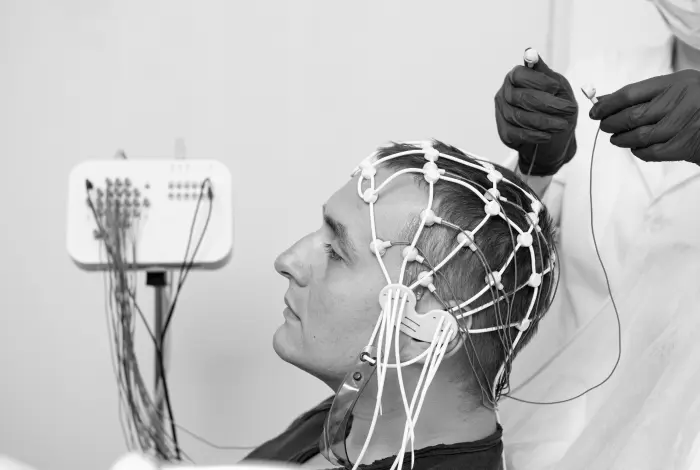
Simply Explained
Every action, moving a limb, feeling touch, regulating heartbeat, relies on electrical and chemical signals travelling along nerve pathways. Central disorders interfere with the brain or spinal cord. Peripheral disorders affect the nerves outside these structures. Both can produce overlapping symptoms, making a precise diagnosis essential.
Symptoms
Symptoms vary based on nerve location, type, and severity.
- Motor Symptoms: Muscle weakness, paralysis, coordination difficulties, tremors.
- Sensory Changes: Numbness, tingling, burning sensations, altered pain perception.
- Autonomic Disturbances: Blood pressure instability, bowel or bladder issues, abnormal sweating.
- Pain Syndromes: Neuropathic pain, radiating pain, hypersensitivity.
- Cognitive or Balance Issues (CNS-related): Confusion, gait instability, and spatial disorientation.
Assessments
Detailed mapping of neural pathways to identify the source of dysfunction.
- Comprehensive Neurological Examination
- Neuroimaging Review: MRI, CT, spinal imaging.
- Electrophysiological Studies: Nerve conduction studies, EMG.
- Autonomic Function Testing
- Laboratory & Metabolic Screening
- Functional & Rehabilitation Evaluation
Treatment
Targeted, multidisciplinary management based on diagnosis and severity.
- Medical Management: Address inflammation, degeneration, or metabolic causes.
- Neurorehabilitation: Physical and occupational therapy for strength and coordination.
- Neuromodulation Therapies: Supports neural communication where appropriate.
- Pain & Sensory Management: Neuropathic pain protocols.
- Lifestyle & Supportive Care: Sleep, nutrition, and activity optimisation.
Outcomes
With early and accurate diagnosis, many central and peripheral nervous system disorders can be stabilised, slowed, or functionally improved. Treatment focuses on preserving independence, reducing symptom burden, and restoring neural efficiency wherever possible.

Our approach integrates advanced diagnostics, neurological expertise, rehabilitation medicine, and mind-body therapies, ensuring care that addresses both the signal disruption and its impact on daily life.
Understanding Central & Peripheral Disorders
Explore expert insights, practical guidance, and clear answers to your most pressing questions about Central & Peripheral Nervous System Disorders and its care.
What is the difference between central and peripheral disorders?
Central disorders affect the brain and spinal cord; peripheral disorders affect nerves outside these structures.
Can symptoms overlap between CNS and PNS disorders?
Yes. Accurate testing is essential to identify the true source.
Are these conditions progressive?
Some are reversible, others progressive. Early evaluation improves outcomes.
Can nerve damage be repaired?
Some nerves regenerate; others require rehabilitation and compensation strategies.
Do all nerve disorders cause pain?
No. Some cause weakness or numbness without pain.
When should I see a neurologist?
If symptoms persist, worsen, or affect daily function.
